
Moving out of a rental is stressful enough without worrying about whether your clean will pass inspection. For many Australian tenants, the end of lease clean is the final hurdle standing between them and getting their full bond back. Yet the rules often feel vague, agents’ expectations seem inconsistent, and one missed detail can lead to hundreds of dollars being deducted from your bond.
An end of lease clean isn’t about making the property brand new. Under Australian tenancy laws, the property must be returned in a “reasonably clean” condition, comparable to how it was when you moved in, allowing for fair wear and tear. The problem is that “reasonably clean” is judged against the original entry condition report, and that’s where most disputes start.
This guide breaks down exactly what is required for an end of lease clean in Australia, room by room, so you know what needs to be done, what doesn’t, and how to avoid common bond traps.
What “Reasonably Clean” Means Under Australian Tenancy Law
Across QLD, NSW, and VIC, tenancy authorities use similar language when defining cleaning standards at the end of a lease. The expectation is not perfection, but consistency with the entry condition report.
If the property was professionally cleaned before you moved in, it’s reasonable for the agent to expect it to be professionally cleaned again. If it was only generally clean, you’re not required to go beyond that standard.
Fair wear and tear is not your responsibility. This includes faded paint, worn carpets, minor scuffs, and ageing fixtures. Cleaning issues, however, such as grease, dust, grime, mould, and soap scum, are the tenant’s responsibility.
Where tenants run into trouble is assuming the agent’s opinion is final. It isn’t. Bond disputes are decided based on evidence, not personal standards. This is why following a clear checklist and documenting your clean matters.
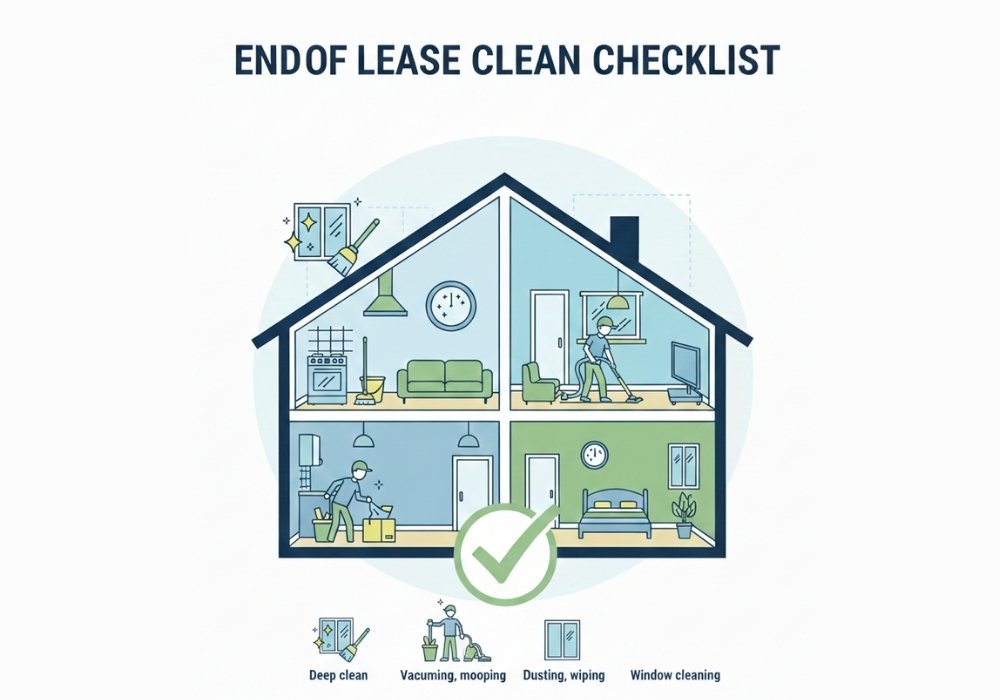
The End of Lease Cleaning Checklist (Room by Room)
General Areas (All Rooms)
Every room in the property must be cleaned, even spaces that were rarely used. General cleaning requirements apply across the entire home.
Walls should be spot cleaned to remove marks, fingerprints, and smudges. Full wall washing is not required unless there is heavy staining beyond normal use. Skirting boards, door frames, and architraves should be wiped free of dust and marks. Doors need to be cleaned on both sides, including handles.
Light switches, power points, and air vents often collect grime and are commonly checked during inspections. Floors must be thoroughly vacuumed and mopped, including edges and corners. Internal windows should be cleaned, along with window frames and tracks.
Many tenants lose bond money over these small details, not major mess.
Kitchen Cleaning Requirements
The kitchen is one of the most heavily scrutinised areas during an end of lease inspection. It’s also where tenants most commonly underestimate the time required.
The oven must be fully cleaned inside and out, including trays, racks, glass doors, and internal panels. Built-up grease is one of the fastest ways to fail an inspection. The cooktop should be degreased, with burners and control knobs removed and cleaned where possible.
Rangehoods must be cleaned, and filters degreased and free from dust. Cupboards and drawers need to be wiped both inside and outside, including handles and hinges. Benchtops, splashbacks, and tiles must be free of grease and residue.
The sink and taps should be polished, with no water stains or food debris. If a dishwasher or microwave is included with the property, these must also be cleaned inside and out.
Kitchen cleaning takes longer than expected, and rushing this area is a common reason tenants are asked to re-clean.
Bathroom and Toilet Requirements
Bathrooms are another high-risk area for bond disputes, particularly around mould and soap scum.
Showers must be cleaned thoroughly, including screens, frames, tiles, grout, and drains. Soap residue and water marks on glass are often flagged, even if the bathroom looks clean at first glance. Toilets must be cleaned inside the bowl, around the rim, on the seat, and at the base.
Vanities, sinks, mirrors, and storage cupboards should be wiped inside and out. Tiles and grout need to be free from mould where reasonably possible. Exhaust fans should be dusted, as agents often check these during inspections.
Mould caused by structural issues or poor ventilation may not be the tenant’s fault, but surface mould caused by lack of cleaning usually is. This is a common source of disagreement at lease end.
Bedrooms and Living Areas
Bedrooms and living areas are usually simpler to clean but still require attention to detail.
Wardrobes must be emptied and wiped inside and outside, including shelves and rails. Mirrors and internal windows should be streak-free. Skirting boards, door frames, and light switches must be clean.
Floors need to be vacuumed thoroughly, with carpets free of visible marks. Any furniture provided with the property must be cleaned underneath and behind.
Tenants often forget wardrobes and door tracks, which can result in unexpected cleaning requests.
Laundry Requirements
The laundry is frequently overlooked, which makes it a common inspection issue.
The laundry trough and taps should be cleaned and free of stains. Cabinets need to be wiped inside and out. Splashbacks, walls, and floors should be cleaned, especially behind washing machines and dryers.
Lint, dust, and water marks are common problems in this area and easy for agents to spot.
Additional Cleaning Requirements to Check For
Some end of lease cleaning requirements depend on your lease agreement and how the property was originally handed over.
Carpet steam cleaning is often required, particularly if carpets were professionally cleaned at the start of the tenancy. Pest control is commonly required if pets were kept at the property, especially in QLD.
Balconies, courtyards, and garages must be cleaned if they are part of the rental agreement. This includes sweeping, removing cobwebs, and clearing any rubbish. Accessible external windows may also need to be cleaned.
Tenants are often caught out by these extras because they’re buried in lease clauses or special conditions.
What Is Not Required in an End of Lease Clean
Understanding what you are not responsible for is just as important.
You are not required to fix fair wear and tear, repaint walls due to fading, replace old carpets, or clean areas that were already dirty at the start of your tenancy. Exterior walls, roofs, and areas inaccessible without specialised equipment are generally not your responsibility.
Agents cannot require the property to be cleaner than it was when you moved in. If they try, they must provide evidence to support their claim.
DIY End of Lease Cleaning vs Hiring Professionals
Many tenants debate whether to clean themselves or hire professionals.
DIY cleaning can save money upfront, but it costs time and energy. A full end of lease clean often takes 10 to 20 hours, especially if the oven, bathrooms, and windows are heavily soiled. If the clean fails inspection, you may need to re-clean under tight timeframes or pay for professional cleaners anyway.
Professional bond cleaners cost more initially but usually include a bond-back guarantee, meaning they will return to fix any issues raised by the agent. For tenants on tight schedules or with larger properties, this can reduce stress and risk.
The right choice depends on the property’s condition, your time availability, and how confident you are with detailed cleaning.
How to Make Sure Your End of Lease Clean Passes Inspection
Start by reviewing your entry condition report and photos. This document is your benchmark. Use a detailed checklist and work room by room, rather than cleaning randomly.
Take clear photos and videos after cleaning, focusing on ovens, bathrooms, windows, and floors. Leave enough time between cleaning and inspection to fix any missed items.
If possible, attend the final inspection. Being present allows you to address minor concerns on the spot and reduces misunderstandings.
State-Specific End of Lease Cleaning Rules
In Queensland, tenants must complete an Exit Condition Report and return the property in substantially the same condition as the entry report. Professional carpet cleaning and pest control are often enforced if stated in the lease.
In New South Wales, the standard is “reasonably clean,” and tenants must be given the opportunity to fix cleaning issues before the agent organises cleaners at the tenant’s expense.
In Victoria, tenants must provide vacant possession and leave the property reasonably clean. Landlords generally must give 14 days’ notice if they intend to claim bond for cleaning issues.
Knowing your state rules gives you confidence if a dispute arises.
Getting Your Bond Back Without the Stress
An end of lease clean doesn’t have to be overwhelming. When you understand what is required, follow a checklist, and match the entry condition report, you significantly reduce the risk of bond deductions. Plan ahead, clean thoroughly, and document everything. Whether you choose DIY or professional cleaners, clarity and preparation are what ultimately protect your bond.