
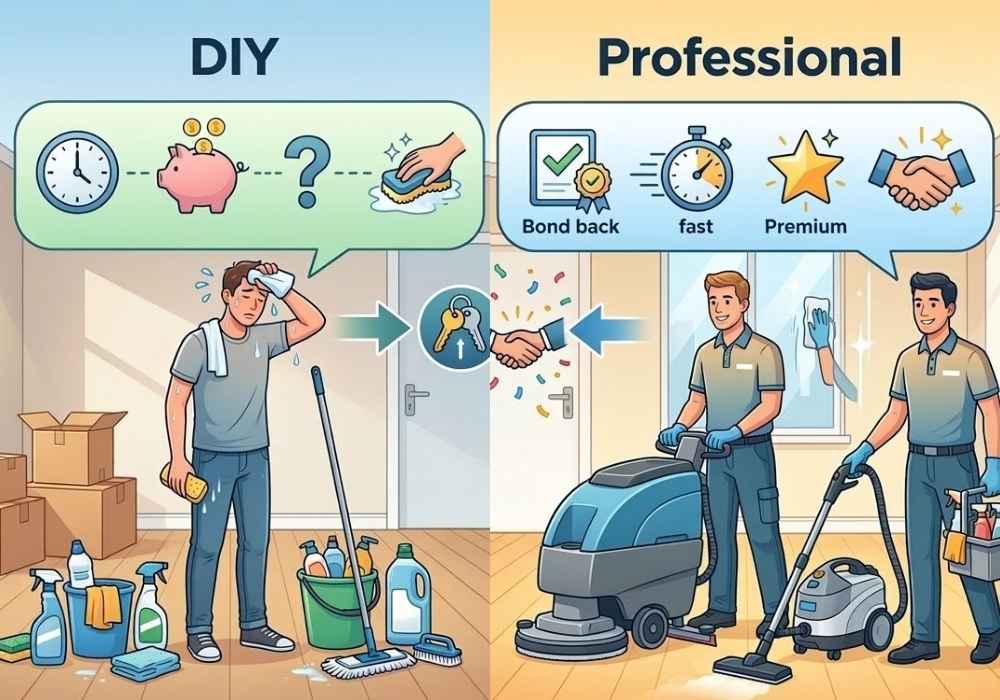
Losing part of your bond can be one of the most stressful parts of moving out. According to tenancy data, a significant number of tenants lose money simply because their property didn’t meet the cleaning standards expected at the end of a lease. Whether it’s stubborn marks on walls, grimy windows, or carpets that haven’t been properly cleaned, a small oversight can cost you hundreds of dollars.
If you’re staring down the end-of-lease checklist, you might be wondering whether you should tackle the clean yourself or hire a professional. Both options come with pros and cons, and your choice can make a big difference to your bond return, your stress levels, and the time you spend cleaning. In this guide, we’ll break down the differences, costs, and practical considerations so you can make an informed decision and walk away from your tenancy with your full bond intact.
Understanding Bond Cleaning Requirements
Before deciding whether to go DIY or professional, it’s important to understand what bond cleaning actually entails. Across Australia, tenancy laws are clear that the property should be returned in a “reasonably clean” condition, matching the standards outlined in your condition report.
This usually includes:
| Area | Expected Standard | Typical Tasks |
| Floors | Spotless, mop or vacuum | Carpet steam clean, vacuum, mop tiles/laminate |
| Walls | Free of marks, stains | Spot clean scuffs, fingerprints, and minor marks |
| Bathrooms | Sanitised, no soap scum | Scrub showers, basins, tiles, mirrors |
| Kitchen | Grease-free, cleaned appliances | Oven, stove, range hood, fridge wipe |
| Windows & Blinds | Streak-free and dusted | Clean glass, frames, flyscreens, vertical blinds |
| Outdoor Areas | Free of debris | Patios, driveways, outdoor furniture cleaned |
Many tenants underestimate the level of detail required, assuming a casual clean will be enough. Missing a few spots, leaving streaks, or neglecting hard-to-reach areas can lead to deductions.
DIY Bond Cleaning
Tackling the bond clean yourself might seem appealing, especially if you’re trying to save money or enjoy the satisfaction of doing it yourself. Here’s what you need to know.
Step-by-step approach
A DIY bond clean generally involves:
- Clearing rooms of furniture and clutter
- Dusting and wiping walls and skirting boards
- Vacuuming and steam-cleaning carpets
- Cleaning bathrooms and kitchens with strong, safe cleaning products
- Washing windows, mirrors, and any blinds
Pros of DIY
- Lower upfront cost – you only pay for cleaning products and equipment
- Flexibility to clean on your own schedule
- Full control over the process and attention to personal priorities
Cons and risks
- Time-consuming: For a standard 2–3 bedroom house, expect 6–10 hours, sometimes longer if walls or windows are stained.
- Skill gaps: Many tenants don’t know the correct cleaning techniques or which products are safe for specific surfaces, which can lead to streaks, marks, or even damage.
- Missed areas: It’s easy to overlook corners, vents, inside ovens, or behind furniture. Missing these spots can lead to deductions from your bond.
- Stress: Balancing work, moving, and a full clean can be overwhelming. The anxiety of possibly losing part of your bond can add to the stress.
Costs involved
Even DIY isn’t free. Consider:
- Cleaning products (vinegar, detergents, specialised sprays)
- Equipment (microfibre cloths, mops, buckets, scrubbing brushes)
- Optional rentals (steam cleaner or carpet cleaner)
- Your own time and energy
While DIY saves the professional fee, hidden costs and the risk of bond deductions often outweigh the savings.
Professional Bond Cleaning
Hiring a professional service might cost more upfront, but it brings peace of mind and a higher chance of full bond recovery.
What professional cleaners do
A quality bond cleaning service covers:
- Deep cleaning of kitchens, bathrooms, floors, and walls
- Carpet steam cleaning and spot treatments
- Window and blind cleaning, inside and out
- Appliance cleaning (oven, fridge, microwave)
- Outdoor areas if included in the service
- High attention to detail to match condition report expectations
Pros
- Bond-back guarantee: Many professional services promise re-cleaning within 48–72 hours if the property fails inspection.
- Time-saving: Professionals can finish what would take a tenant a whole weekend in just a few hours.
- Expertise: Trained cleaners know the correct products and techniques for every surface, reducing the risk of damage.
- Stress reduction: No need to worry about missed spots or improperly cleaned areas.
Cons
- Cost: For a 2–4 bedroom home, expect $250–$600 depending on size, condition, and location.
- Scheduling: Must book in advance and ensure access on the cleaning day.
Cost Comparison and Value
Here’s a quick comparison to help you weigh the value:
| Factor | DIY | Professional |
| Average Cost | $50–$150 | $250–$600 |
| Time Required | 6–10 hours | 2–6 hours |
| Bond Risk | Higher | Lower (bond-back guarantee) |
| Equipment Needed | All DIY | Included by service |
| Effort | High | Low |
| Expertise | Moderate | High |
While DIY is cheaper, the risk of missing areas, damaging surfaces, or underestimating cleaning requirements can end up costing more than hiring a professional. Paying for experts is often an investment in securing your bond.
When DIY Works and When to Hire Professionals
DIY bond cleaning can work if:
- You live in a small studio or apartment
- The property is in good condition with minimal stains
- You have plenty of time and energy to devote
Hiring professionals is recommended if:
- You have a large house or multiple levels
- The property has stubborn stains, mould, or carpet issues
- You want the highest chance of full bond recovery
- You’re short on time and want to reduce stress
Tips to Maximise Bond Recovery
Whether DIY or hiring professionals, these tips can improve your chances of getting your full bond back:
- Use a room-by-room checklist to ensure nothing is overlooked
- Test cleaning products on hidden areas first to avoid damage
- Take before and after photos of cleaned areas
- Schedule early to allow touch-ups if necessary
- Pay attention to high-visibility areas that agents are likely to check
Conclusion
Deciding between DIY and professional bond cleaning comes down to your budget, time, confidence, and stress levels. DIY might save money upfront, but it requires significant effort and carries a higher risk of missing critical areas. Professional cleaners cost more, but they bring expertise, efficiency, and peace of mind, often backed by a bond-back guarantee.
For many tenants, hiring professionals is an investment in security and a stress-free move. If you choose to go DIY, plan carefully, follow checklists, and give yourself plenty of time. Either way, being thorough and prepared is the key to walking away from your tenancy with your full bond intact.